
By now, we’re four—almost five—months into the year. And let’s be honest: whether it was starting a workout routine, staying consistent with a home exercise program, or simply moving better day-to-day, for many of us, those goals have faded into the background… or disappeared entirely.
Research from Dr. Michelle Rozen—a psychologist, bestselling author, and “The Change Doctor”—suggests that just 6% of people follow through on their New Year’s resolutions for the entire year. But here ’s the truth: it’s not too late.
- It’s not too late to reset.

- It’s not too late to refocus
- And it’s definitely not too late to revive the goals that matter to you.
As physical therapists, our role goes far beyond guiding exercises or improving movement. Our mission is to consistently motivate people in a direction that enhances functionality, mobility, and ultimately, quality of life.
From the outside, physical therapy might seem simple. Some even assume it’s easy. But once you’re on that treatment table—you realize something quickly: it’s work.
Real work. Physical and mental. And that’s where motivation becomes everything.
Finding Your “Why”
One of the biggest things we focus on at Advance Rehabilitation is what we call the motivation factor.
In order to breakdown and easily understand the motivation factor you must ask yourself the following questions. 
- What drives you?
- Why are you here?
- What are you trying to get back to?
Whether it’s playing with your kids, returning to a sport, getting back to work, or simply living without pain—your “why” has to be personal. Because if your motivation is vague or borrowed from someone else, it won’t last.
Real motivation isn’t abstract. It’s specific. It’s meaningful. And it’s yours.
Making Goals Stick: Real Strategies from Our Clinics
Our therapists across Advance Rehabilitation use practical, personalized strategies to help patients stay motivated—not just at the beginning, but throughout the entire journey.
St. Simons Island, GA Clinic, Megan Taylor, shares on goal setting and setting priorities:
Megan Taylor, PT, DPT
“One way I help patients set goals they actually stick to is by incorporating their personal priorities into the treatment plan. By identifying the specific activities, they want to return to or improve, I can tailor treatment programs to directly target those goals—making the plan more meaningful, realistic, and achievable for each patient.”

Columbus, GA Clinic, Jasmine Carbone, DPT, emphasizes structure and accountability:
Jasmine Carbone, PT, DPT
“At the initial evaluation, we use SMART goals and revisit them throughout their plan of care. SMART stands for specific, measurable, achievable, realistic, and time-based. This objectively helps us see them make improvements throughout their PT plan of care.”

Braselton, GA Clinic, Gina Furter, DPT, highlights the importance of pacing and progression:
Gina Furter, PT, DPT
“Meet your body where it’s at and work from there. I tell patients this all the time. This helps reduce future injury risk, allows for small steps toward bigger goals, and makes those bigger goals feel more attainable.”

Calhoun, GA Clinic, Andrew Sorensen, DPT, focuses on clarity from day one:
“At the initial evaluation, being clear about the simple information—making sure patients understand what’s wrong, what I can do as the therapist, what they can do as the patient, and how long this will take—helps establish rapport, set appropriate expectations, and create a sense of hope.”
Personalized Care Means More Than Just Exercises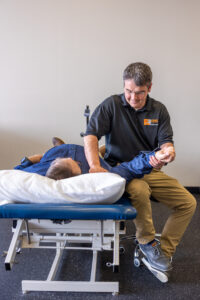
When we talk about personalized plans of care, we mean truly personalized.
Yes, that includes targeted exercises to strengthen your body and improve movement. But it also includes something just as important—your mindset.
Because the truth is, your body and your mind don’t operate separately. You can’t fully heal one without addressing the other.
Progress happens when:
- Your body is moving in the right direction
- Your mind is aligned with your goals
- And your motivation is rooted in something real
It’s Time to Recommit
If your goals have slipped this year, you’re not alone. But you’re also not stuck.
Take a moment to revisit your “why.” Make it Personal. Make it Meaningful. And most importantly—make it Something that Moves You.
Because whether you’re in physical therapy or simply working toward a better version of yourself, the path forward is the same: Clarity. Commitment. Consistency.
And at Advance Rehabilitation, we’re here to support that journey—every step of the way.